
History of the Colorado LCA and the Rise of the Modern DAO
The Historical Origins of the Limited Cooperative Association (LCA) and its modern use for the Decentralized Autonomous Organization: Colorado’s Statutory Innovation
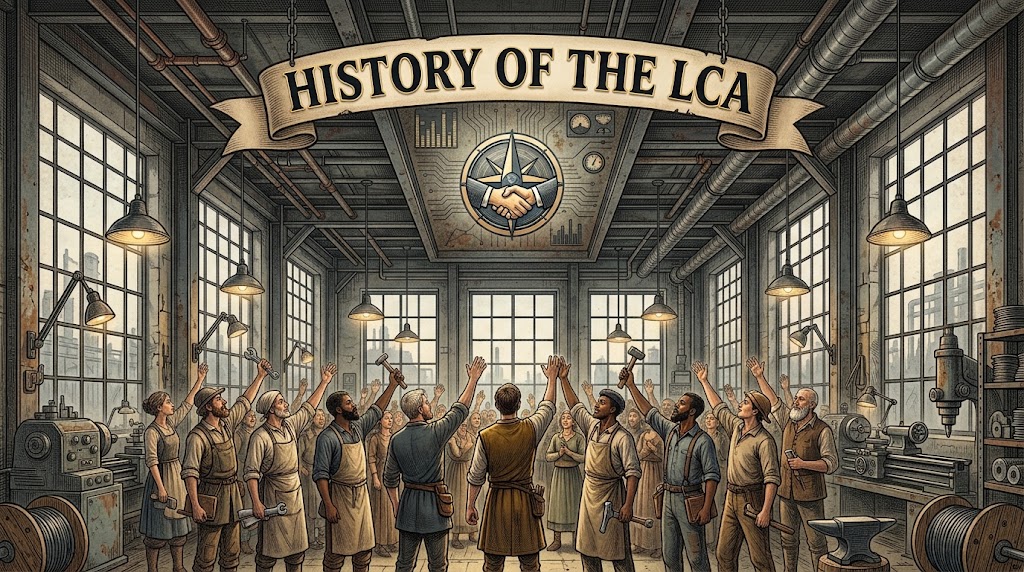
From Medieval Guilds to Web3: The History of the Colorado LCA and the Rise of the Modern DAO Legal Wrapper
Historically, community-led organizations operated much like the trade guilds of the Middle Ages. These ancient collectives brought individuals together under a shared purpose—pooling resources, protecting members, and self-governing long before modern corporate law existed. Today, the Decentralized Autonomous Organization (DAO) serves as the spiritual successor to those guilds, leveraging blockchain technology to offer transparent, borderless, and community-driven governance.
However, pure DAOs face a critical existential hurdle: they exist primarily in code onchain. To interact with the real-world economy, to sign contracts, open fiat bank accounts, hire contractors, or shield members from personal liability, a DAO requires a “legal wrapper”.
While state lawmakers never originally anticipated blockchain technology, the Colorado Limited Cooperative Association (LCA) has emerged as one of the most flexible and robust legal wrappers for Web3 organizations today.
The Historical Origins of the LCA: Colorado’s Statutory Innovation
To understand why the LCA fits DAOs so well, we must look at the history of cooperative law in the United States.
Traditional cooperatives trace their roots to the Rochdale Principles of 1844, which prioritize democratic control (“one member, one vote”) and community benefit. However, standard cooperative statutes were historically rigid. Traditional co-ops prohibited outside equity investment and strictly required members to be active patrons (workers, producers, or consumers) who utilized the co-op’s direct services.
By the early 2000s, state legislators recognized that community-focused enterprises needed a modern vehicle—one that retained cooperative ethos while offering the financial agility of a Limited Liability Company (LLC). In 2007, the Uniform Law Commission drafted the Uniform Limited Cooperative Association Act (ULCAA) to bridge this gap.
Colorado officially adopted its version of the ULCAA through Senate Bill 11-191 on May 23, 2011, which went into effect on April 2, 2012 (codified under Article 58 of Title 7 in the Colorado Revised Statutes). Colorado’s LCA legislation created a multi-stakeholder corporate entity designed to harmonize two distinct priorities:
- Democratic, patron-led governance rooted in cooperative values.
- Flexible capital structures allowing non-patron investor members to provide financial backing without usurping control.
This statutory flexibility turned Colorado into a pioneering hub for modern, collaborative business models. A decade later, Web3 builders realized that Colorado’s LCA framework was uniquely suited to solve the DAO legal wrapper dilemma.
Why the Colorado LCA is the Ideal Wrapper for DAOs
When a DAO operates without a legal wrapper, courts often view it as an unincorporated general partnership. This subjects individual token holders and core contributors to unlimited personal liability for the actions of the group.
The Colorado LCA solves this by extending the “corporate veil,” shielding individual members from personal financial ruin while legally recognizing the organization.
Key Advantage: Unlike traditional LLCs or corporations that mandate hierarchical boards and profit-maximization for shareholders, the Colorado LCA legally recognizes democratic governance (“one member, one vote”) and community purpose above private profit.
Key Features of the Colorado LCA for Web3
- Dual-Class Member Architecture: The LCA framework explicitly allows for Patron Members (active contributors/builders who hold voting control) and Investor or Sponsor Members (entities providing capital without voting power).
- Governance Flexibility: Articles of Organization and Bylaws (or Charters) can be customized to mirror smart contract mechanics and decentralized voting procedures.
- Liability Protection: Shields members’ personal assets from organizational debts and liabilities.
- Tax Adaptability: LCAs can operate as pass-through entities or pair with non-profit status to fit specialized tax frameworks.
Case Study: The Fort Worth DAO Blueprint (LCA + 501(c)(3))
A real-world illustration of this legal architecture in action is the Fort Worth DAO. Positioned as a civic innovation lab designed to advance digital sovereignty and cyber workforce development in Fort Worth, the organization required a structure that combined decentralized governance with a public-benefit, tax-exempt purpose.
On November 24, 2025, the organization officially incorporated as a Colorado Limited Cooperative Association. To execute this hybrid model seamlessly, the Fort Worth DAO developed a structured blueprint:
1. Web3 Genesis & Physical Anchor
Before filing state paperwork, the Fort Worth DAO launched natively onchain using the Aragon App on the Base blockchain network, establishing its smart contracts and cryptographic admin controls. To interface with Web2 legal requirements, they established a physical presence in Denver, Colorado, securing a mailing address and professional Registered Agent.
2. Hybrid Governance Pipeline
To preserve decentralization without violating state co-op laws, the DAO established two member classes:
- Patron Members: Active civic builders holding voting rights (one member = one vote).
- Sponsor Members: Financial backers without voting power, ensuring active builders retain operational direction.
Decisions follow a strict four-step governance pipeline:
- Drafting: A Patron Member drafts an actionable proposal.
- Offchain Check: The Governing Council conducts a real-world review using parliamentary procedure (Robert’s Rules of Order) to ensure alignment with charitable goals.
- Voting: The community votes democratically on a custom platform (Robs Rules DAO).
- Onchain Execution: Results are permanently recorded onchain via Aragon on Base.
3. Merging LCA with 501(c)(3) Non-Profit Recognition
To take community benefit a step further, the Fort Worth DAO filed IRS Form 1023-EZ and attained federal 501(c)(3) tax-exempt status. By explicitly prohibiting profit distributions to members in its governing charter and enforcing annual conflict-of-interest disclosures, the entity secured federal tax exemption alongside state-level tax exemptions from the Texas Comptroller and the State of Colorado.
4. Unlocking Web2 Financial Infrastructure
With its Colorado LCA incorporation and federal EIN, the DAO opened traditional fiat banking accounts. Traditional fiat accounting is tracked alongside onchain digital treasuries on Base—allowing the DAO to sign real-world contracts, host civic workforce hackathons, and accept tax-deductible fiat donations transparently.
Conclusion: The Modern Guild Emerges
By combining democratic governance, flexible membership tiers, and limited liability protection, the Colorado LCA bridge allows decentralized communities to interact safely with the traditional economy. As demonstrated by the Fort Worth DAO, pairing a Colorado LCA with non-profit 501(c)(3) status provides a blueprint for how onchain collectives can build lasting, compliant, real-world impact.