
Reflections on My First Hackathon
Going from coulda-shoulda-woulda to shipping two apps in a month, plus what I noticed about Fort Worth, the hacker community, and where this is all going.
A couple months ago, I was a coulda-shoulda-woulda when it came to programming. Always learned just enough to get by. Took a few classes, wrote a few scripts, but never brought any of my ideas to a repo. Watching the inaugural HackFW event come together reminded me how much has changed, and how fast.
The classes and structure of the competition drove me to finally learn how to use GitHub, how to structure an app, and what actually matters (and doesn’t). That gave me the confidence to just jump.
In the span of a month, I built my first two standalone applications and brought myself up to speed enough to “vibe code.” I deployed a few different OpenClaw setups before ultimately settling on a local Claude Code session inside Antigravity. Eventually added GLM 5.1 to supplement the token burn, which I now know is very real, my friends.
The bottleneck now is me. How much time do I have to sit down and ideate, iterate, and push? I finally understand so much more — environments, runtimes, autos — concepts I’d heard of but never really grasped. I think about Karpathy’s quote: “you can outsource your thinking, but you cannot outsource your understanding,” and I realize the impetus is on me to keep riding this wave and not get wiped out by the forces of generative AI.
That applies to all of us, not just coders. A failure to adapt and embrace this technology will be entirely on ourselves. Maintaining an active mind — still learning, still improving, still writing new thoughts and ideas — will become more important than ever.
Before this, I’d kept AI at arm’s length. Skeptical. Maybe too stuck in my ways. Untrusting of the “other,” the I’ll just do it myself mentality that’s going to become more harmful than helpful from here on out. Listening to the way Tyler @OpenClawPlex has handed over the keys to his life is both daunting and inspiring. I find myself asking what that looks like for me and my business, and I’m eager to build it.
What I Noticed
1. People are very guarded with their ideas. I suspect this is a major innovation blocker. The instinct to protect a half-formed concept often kills it before it has a chance to grow.
2. Business modernization is extremely isolated. Yes, there are individuals building and leveraging the convergent tech we focused on, but in talking to people I felt empathetic to that feeling of being the only one at a company trying to move the needle. Businesses are moving way too slow and massively under-leveraging the talent in their own backyard.
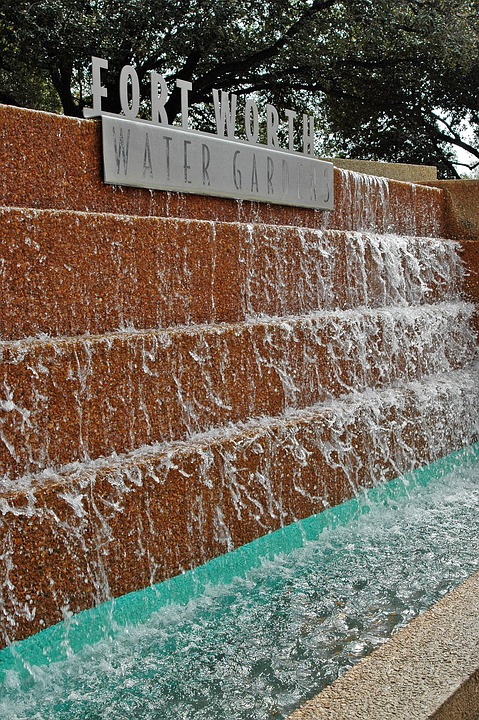
3. UTA Fort Worth — wow, what a campus. The repurposed train station, the friendly hosts, the energy of the space. Couldn’t have asked for a better setting. Collecting bright minds under one roof served as a beacon of hope for what this city could become. All the ingredients are here; we just need to mix them up and put them in the oven. Honestly, it made me want to go back to school.
4. The hacker community is innately diverse, and it feels good to be included. I’ve always known this — maybe it’s the anonymous nature of the internet — but every hacker meetup I’ve been to has made me feel welcome, never passing judgment on skill level or background. The global lineage of this culture more accurately represents the city we actually live in, and it’s refreshing to know we’re overcoming the forces attempting to segregate our society.
5. We’re still early. It’s great to see everyone hopping on the crypto/AI train, but make no mistake, we are at the very beginning of this.
Where This Is All Going
I think there’s a shift happening from capital → companies to individuals → guilds → companies. Instead of VC money buying ideas and chaining down the talent (not always to a detriment, but often), we’re moving toward a world where ideas and code are input directly into missions, where like minds congeal to build things that benefit themselves and others. Most business transactions will become automatic. People will wake up each day and choose what to build, joining the missions they actually care about.
Which raises the questions I keep coming back to. What does software development look like in 5 years? Assuming the exponential growth of model performance and efficiency, how will human engineering contributions be measured? Startups that once took years and millions in VC will soon be launched in weeks. Enterprise codebases will have increasingly more threat vectors and vulnerabilities to monitor. How will security and data provenance factor into a world where anything can be faked? How will “app ideas” from non-coders get brought to life?
And what will the compensation model look like for developers and contributors? Assuming the trajectory toward everything being open source and seamless micro-transactions across networks, I can envision a world where coders sit down and are compensated in real time as their code merges, their commits ship, and their work gets used.
All in all, I’m still bullish on Fort Worth and proud to call it home. Can’t wait to continue with what we’re doing and bring these ideas to life.
Huge shoutouts once again to UTA Fort Worth for the hospitality, Tobalo @FWTXDAO, Christian @Tekimax, and the @Bananamanbran for taking the time to teach, and to the awesome sponsors @LiquidAcres and @Tekimax for standing behind the mission.